
Software
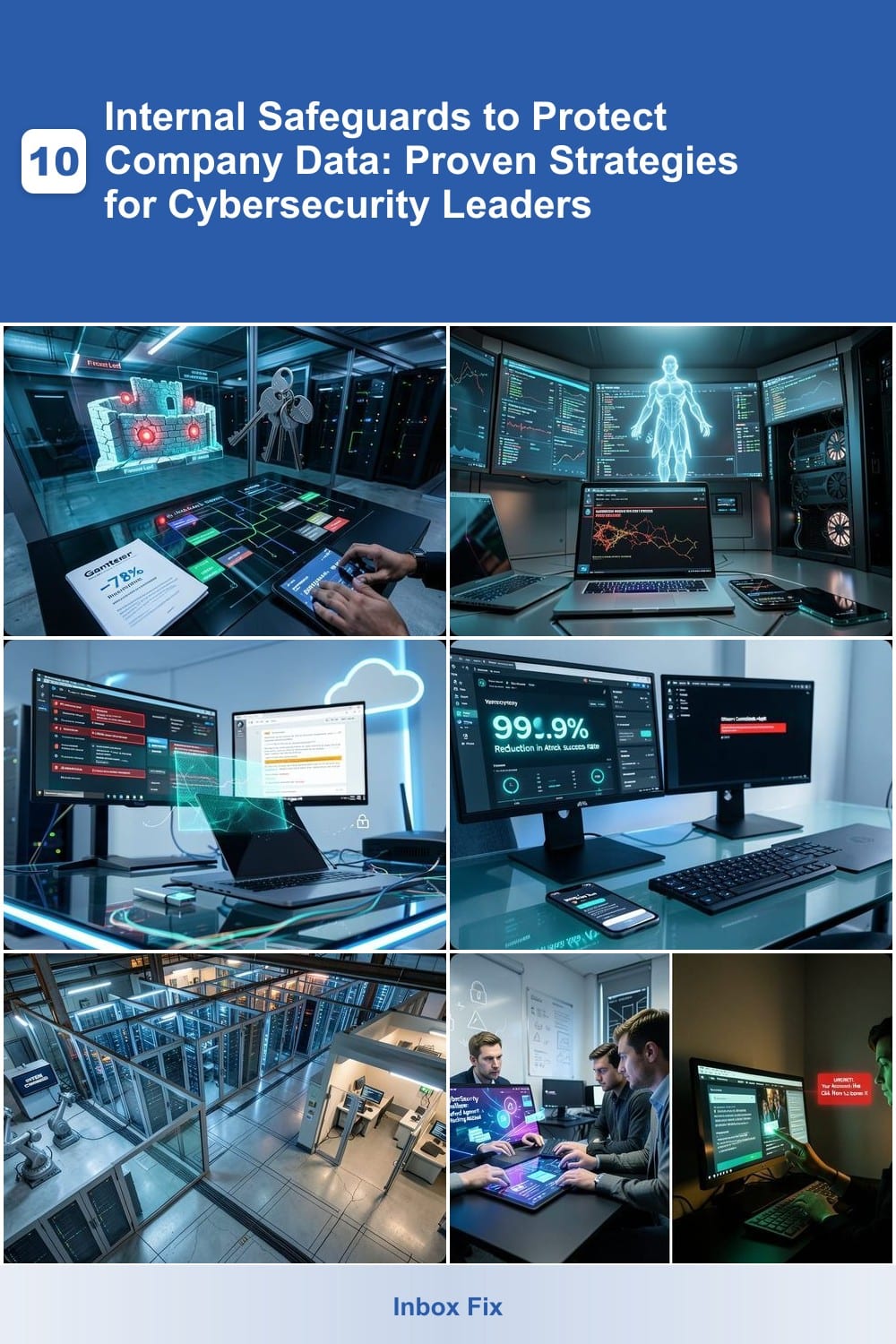
Data breaches cost companies millions annually—yet most cyberattacks exploit preventable internal vulnerabilities. These 10 internal safeguards provide cybersecurity leaders with actionable, defense-in-depth strategies to lock down company data before threats materialize.
Role-Based Access Control Implementation Guide

If your company’s data feels like a fortress with too many keys floating around, role-based access control (RBAC) is the solution. By assigning permissions based on job roles—not individual users—you eliminate unnecessary access and drastically cut insider threat risks. Gartner’s research shows this approach reduces privilege escalation incidents by 40%, making it a game-changer for finance, healthcare, and any industry handling sensitive data.
RBAC works by mapping user roles (e.g., HR Manager, Finance Analyst) to predefined permission sets, ensuring employees only access what they need to perform their duties. Tools like Microsoft Active Directory or Okta simplify implementation with zero-config templates for common roles, while audit logs track access in real time. For regulated sectors, RBAC also streamlines compliance by aligning permissions with frameworks like HIPAA or GDPR.
This safeguard is ideal for organizations where data sensitivity varies by department—think payroll systems or patient records. Start with a role inventory audit to identify redundant permissions, then deploy RBAC as your first line of defense. ✨
Endpoint Detection and Response Systems

While firewalls guard your perimeter, endpoint detection and response (EDR) systems act as silent sentinels on every device—spotting threats like zero-day exploits before they can encrypt your data. Unlike traditional antivirus, EDR uses AI-driven behavioral analysis to flag suspicious activity in real time, even on remote laptops or IoT devices.
Solutions like CrowdStrike Falcon or Microsoft Defender for Endpoint provide sub-second threat detection, automated containment, and detailed forensic reports. They’re especially critical for hybrid workforces where devices connect to untrusted networks, as they monitor process injection, lateral movement, and ransomware encryption patterns that evade perimeter defenses.
This isn’t just for large enterprises—small teams with remote workers will benefit most from the zero-trust visibility EDR provides. 💻
Data Loss Prevention Policy Framework

Ever sent an email with confidential data only to realize it slipped past your firewall? A Data Loss Prevention (DLP) Policy Framework acts as a digital bouncer, scanning outgoing emails, cloud uploads, and even USB transfers to block sensitive information before it leaves your network.
Modern DLP solutions like Symantec DLP or Microsoft Purview use AI-driven pattern recognition to flag credit card numbers, SSNs, or proprietary formulas in real-time. They integrate with GDPR-compliant logging to track violations and enforce policies like right-to-erasure requests. For industries handling PII (Personally Identifiable Information), automated alerts prevent costly compliance fines while maintaining operational workflows.
This framework is non-negotiable for legal, healthcare, and fintech teams where a single misplaced file could trigger lawsuits. The best part? Most platforms offer zero-config templates for common compliance standards, so you’re protected from day one. ✨
Multi-Factor Authentication for All Systems

Tired of hearing about another massive breach caused by stolen passwords? Multi-Factor Authentication (MFA) is the simplest yet most effective way to shut down credential stuffing attacks before they start.
With 99.9% reduction in successful attacks, MFA adds a second verification step—like a push notification, fingerprint scan, or one-time code—beyond just passwords. Solutions like Microsoft Authenticator or Duo Security integrate seamlessly with Active Directory, Okta, and Azure AD, covering everything from VPNs to cloud apps. Even better, FIDO2 keys eliminate codes entirely, replacing them with hardware-based authentication.
This isn’t just for IT teams—C-suite executives and remote workers (your biggest attack targets) benefit most. Deploy it across all systems, and you’ll turn stolen passwords into useless noise. ✨
Network Segmentation Architecture Design

When a single compromised device could halt production lines or expose patient records, network segmentation acts as your digital firewall—dividing your network into isolated zones to prevent lateral movement by attackers.
This architecture creates air-gapped segments (like OT networks in factories or EHR systems in hospitals) that remain completely inaccessible from general corporate networks. Tools like Palo Alto Networks VM-Series or Cisco ACI automate segmentation policies, while micro-segmentation at the server level ensures even individual workloads stay protected. The result? A breach in one zone can’t spread to critical systems—containing damage before it escalates.
Manufacturers running SCADA systems or healthcare providers managing electronic health records see immediate ROI from segmentation. It’s the digital equivalent of firewalls between buildings—essential for industries where operational continuity depends on absolute isolation. ✨
Employee Security Awareness Training Programs

Your employees might be your strongest security line—or your biggest vulnerability. Human error causes 90% of breaches, yet most training programs feel like dry manuals. The solution? Gamified security awareness programs that turn phishing simulations into interactive challenges, not just pop quizzes.
Platforms like KnowBe4 or PhishMe deliver real-world phishing tests that mimic actual attack vectors (e.g., fake invoices or urgent "password expiring" emails). Their gamified modules reduce employee click-through rates by up to 60%—and include role-specific scenarios, like a customer service rep spotting a fake vendor request or a manager identifying a CEO fraud email. Analytics show which departments struggle most, so you can tailor follow-up training.
This isn’t just for IT teams—HR, finance, and even interns benefit from bite-sized lessons delivered via microlearning. For companies where compliance (like GDPR or HIPAA) hinges on staff awareness, these programs provide audit-ready proof of ongoing education. 💡
Automated Patch Management System

Ransomware attacks often exploit unpatched software within 24 hours of a vulnerability being disclosed. An automated patch management system turns this window of risk into a closed loop, ensuring critical updates deploy before threats can take hold.
Solutions like Shavlik Protect or SolarWinds Patch Manager scan your entire ecosystem—servers, endpoints, and even embedded systems—then prioritize fixes based on CVSS scores and threat intelligence. They handle zero-config deployments for legacy hardware, reducing IT overhead while maintaining compliance with frameworks like CIS Benchmarks. The result? Fewer late-night fire drills and a 90% reduction in patch-related downtime for proactive teams.
This is the unsung hero for IT teams juggling Windows, Linux, macOS, and IoT devices—especially in sectors like healthcare or finance where unpatched systems can trigger regulatory fines. ⚡
Encrypted Backup and Recovery Solutions

When ransomware strikes, your only lifeline is a backup you can’t encrypt or delete—enter immutable, air-gapped backups. Solutions like Veeam Backup & Replication or Druva inSync create cryptographic snapshots that survive even if your primary systems are locked down, with recovery times measured in minutes, not days.
These tools combine AES-256 encryption in transit and at rest with write-once-read-many (WORM) storage, ensuring backups remain untouchable. For legal firms, a single lost case file could mean lost clients; for banks, missing transaction logs trigger regulatory fines. Automated, offsite replication (often to AWS S3 Glacier Deep Archive or Azure Blob Storage) guarantees compliance while keeping data geographically isolated from threats.
Ideal for industries where downtime isn’t just costly—it’s catastrophic. Lawyers, financial institutions, and healthcare providers rely on these systems to restore operations without paying ransoms or facing irreversible data loss. 💻
Third-Party Risk Assessment Protocol
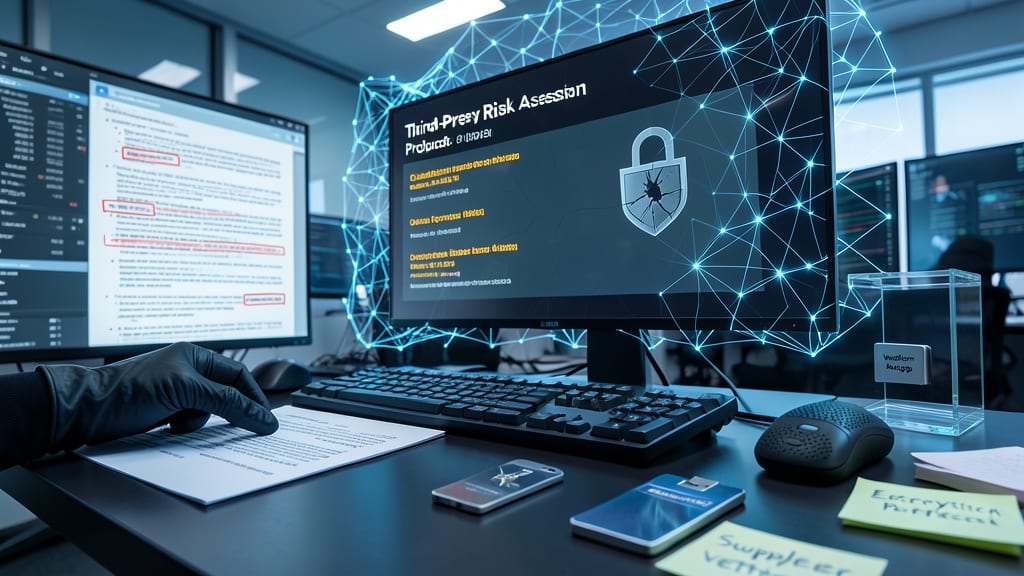
Supply chain attacks are now the #1 cyber threat vector, but you can stop them before they start with a Third-Party Risk Assessment Protocol. This isn’t just another compliance checkbox—it’s a proactive way to vet vendors before contracts are signed, uncovering hidden risks like outdated encryption or unpatched systems.
Start with a structured questionnaire covering SOC 2 compliance, penetration test results, and incident response plans. Use automated tools like SecurityScorecard or BitSight to continuously monitor vendors’ security posture. The key is red flag thresholds—automatically flag vendors with failing scores before they access your systems. For high-risk partners (e.g., cloud providers or payment processors), require quarterly audits to maintain compliance.
This protocol is a must for enterprises relying on third-party services—especially in healthcare, finance, or logistics where data breaches can trigger regulatory fines or operational shutdowns. Implement it early, and you’ll sleep better knowing your supply chain isn’t a ticking time bomb. ✨
Incident Response Playbook Development

When a breach happens, every minute counts—but most companies waste critical hours scrambling to respond. A pre-built incident response playbook turns chaos into action, with step-by-step containment protocols and pre-approved communication templates for PR crises. This isn’t just a document; it’s your battle plan for minimizing downtime and reputational damage when seconds matter most.
Look for playbooks that include real-time escalation paths, legal hold procedures, and stakeholder notification workflows—all tailored to your industry’s compliance needs. Tools like Splunk’s IR playbooks or IBM’s X-Force Incident Response provide customizable frameworks, while NIST’s SP 800-61 offers a free, battle-tested template. The key? Regular drills to ensure your team executes flawlessly under pressure.
Public-facing companies—especially in finance, healthcare, or retail—can’t afford to react slowly. A playbook ensures you contain breaches faster and protect market value by controlling the narrative. 💪