
Tip & Trick
Did you know your keyboard hides powerful symbols starting with 'A' that can boost productivity? These 10 lesser-known characters—from accent marks to advanced typography—will transform how you type, code, and communicate in Windows, Mac, and Linux.
À (Grave Accent A)
Need to type À for French, Portuguese, or Vietnamese documents? This grave accented A isn’t just a language essential—it’s also a coding and technical writing powerhouse. Whether you’re drafting a multilingual manual or annotating code, this symbol bridges gaps between languages and systems seamlessly.
On Windows, press Alt + 0192 (numeric keypad) for À. For Mac, use Option + ` (backtick) + A. Linux users can rely on Compose Key (Compose + ` + A). In programming, À appears in Unicode strings (e.g., \u00C0) and helps distinguish special notation in technical docs. Its versatility makes it a must-know for developers and writers alike.
Perfect for multilingual professionals, educators, and coders** working across languages. Mastering À unlocks precision in global communication and technical precision. ⚡
Á (Acute Accent A)
Need to type Spanish, Hungarian, or Irish without fumbling through manuals? The Á (acute accent A) is your secret weapon—critical for proper word pronunciation and grammar in these languages.
Beyond linguistics, it’s also used in mathematical notation for vectors (like  for magnitude), making it a must-know for engineers and scientists. On Windows, type Alt + 0193, while Mac users can use Option + E + A. Linux? Check your keyboard layout settings for Compose + ' + A.
Perfect for multilingual writers, researchers, and STEM professionals who need precision in both language and notation. ⚡
 (Circumflex A)
Need to type French words like hôtel or Vietnamese terms like Ân without switching layouts? The  (Circumflex A) is your secret weapon—used in scientific texts, technical diagrams, and multilingual documents where standard accents fall short.
This symbol isn’t just for language support: it’s also the Unicode character U+00C2, meaning you can input it via Alt+0194 on Windows or Option+E followed by A on Mac. In LaTeX, use \^A for quick insertion. Its clean, technical aesthetic makes it ideal for flowcharts, chemical formulas, or dual-language manuscripts where precision matters.
Perfect for scientists, translators, and developers working across languages—especially when you need to switch between French, Vietnamese, and English seamlessly. Master this, and your documents will look like they were typeset by a pro. ✨
à (Tilde A)
Need to type Portuguese, Galician, or even some African languages with ease? The à (Tilde A) is your secret weapon—this character isn’t just for words like "cão" (dog) or "pão" (bread), but also plays a key role in programming for special character encoding (like UTF-8 strings).
On Windows, press Alt + 0195 for a quick shortcut, or use Ctrl + Shift + U, then type 00D5 and hit Enter. For Mac users, enable the U.S. International - PC keyboard layout to access it directly. In coding, it’s often used in Unicode escape sequences (e.g., \u00D5) for multilingual software or APIs.
Developers working with multilingual systems or linguists analyzing African languages will find this indispensable. Even casual users typing Portuguese will appreciate the smooth integration it brings. ✨
Ä (Diaeresis A)
Need to type German or Swedish without switching layouts? The Ä (Diaeresis A) is your go-to character for words like Mädchen or Häuser—but it’s also a secret weapon in chemical formulas (e.g., H₂Ä for hypothetical compounds). Unlike other accented letters, this one requires precise input methods to unlock.
On Windows, hold Alt and type 0196 for the uppercase Ä or 0223 for lowercase ä. Mac users can press Option + A followed by E, while Linux often supports Compose + ' + A. For developers, this symbol appears in Unicode tables as U+00C4 (Ä) and U+00E4 (ä), making it easy to embed in code or documentation.
Perfect for linguists, chemists, or multilingual writers, this character bridges Scandinavian languages and technical fields. Master it to streamline your workflow—no layout switching required! ✨
Å (Angstrom Symbol)
Tired of squinting at scientific papers where measurements are labeled in cryptic shorthand? The Å (Angstrom) symbol—representing 0.1 nanometers—is the unsung hero of physics and chemistry, yet it’s missing from most basic keyboard guides.
This versatile character, also used in Swedish and Norwegian, unlocks precise notation for atomic-scale measurements. Type it via Alt+0214 on Windows or Option+A on Mac. It’s a game-changer for writing research papers or labeling diagrams where exact distances matter.
STEM professionals, engineers, and students will appreciate having this Unicode-friendly symbol at their fingertips. ⚡
Ångström Unit Symbol
Ever struggled to distinguish between Å and the Ångström symbol in your research papers? The Ångström unit symbol (Å)—officially written as Å with a ring above—isn’t just a letter; it’s the SI-approved unit for measuring atomic-scale distances (0.1 nanometers). This subtle difference matters when citing precision in spectroscopy, crystallography, or semiconductor research.
Unlike the standalone Å (Angstrom), the Ångström symbol includes a diacritic ring (Unicode: U+212B) to denote its unit status. Type it via Alt+8267 on Windows or Option+Shift+A on macOS. Most scientific journals enforce this distinction to avoid ambiguity—skipping it could lead to rejected submissions. ⚡
Ⓐ (Circular A)
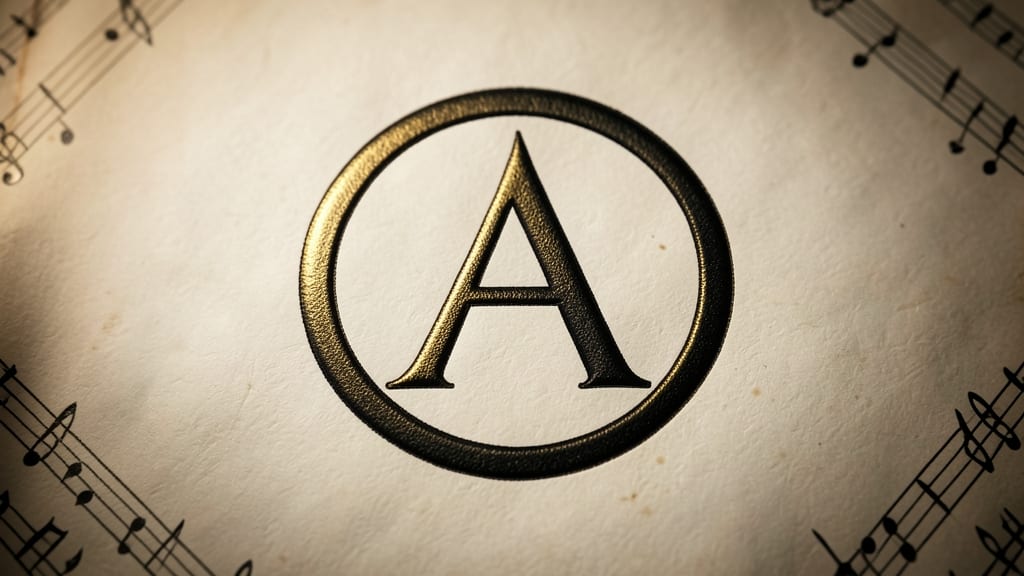
Looking to add a touch of elegance to your documents? The Ⓐ (Circular A) symbol isn’t just a throwback—it’s a powerful tool for designers, musicians, and historians. This Unicode character (U+24B6) appears in ancient manuscripts, medieval musical scores, and modern typography to evoke a sense of history and sophistication.
Unlike standard alphabetic characters, the Ⓐ features a circular frame, making it ideal for vintage-style documents, sheet music, or branding projects. You can input it via Unicode (Alt+9400 on Windows) or copy-paste it directly. Its unique shape also works well in calligraphy and artistic layouts, giving your work a distinguished, almost handwritten feel.
Perfect for graphic designers, music educators, or anyone restoring historical texts, this symbol bridges the gap between modern tech and timeless aesthetics. ⚡
Ⲁ (Coptic Capital A)
If you’re diving into ancient texts or working with Coptic language research, the Ⲁ (Coptic Capital A) is a game-changer. This rare Unicode character (U+2C80) bridges modern digital tools and centuries-old manuscripts, making it indispensable for linguists, theologians, and historians.
Unlike standard Latin letters, this symbol appears in Coptic Bibles, liturgical texts, and scholarly translations of early Christian documents. Access it via Unicode input (e.g., Alt+X after typing 2C80 in Windows) or specialized fonts like Charis SIL or Segoe UI Historic. Its distinct shape—resembling a stylized "A" with a crossbar—adds authenticity to digital reproductions of ancient scripts.
Perfect for researchers transcribing Sahidic or Bohairic texts, or anyone working with pre-Islamic Egyptian languages. Master this symbol to unlock precision in religious studies and historical linguistics. ✨
⒜ (Blackletter A)
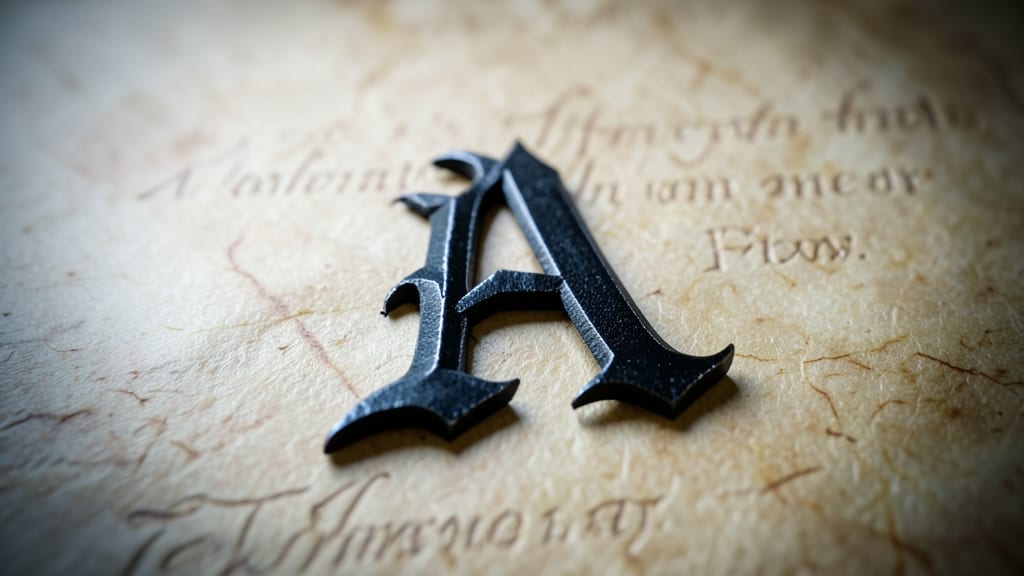
Need to lend your documents an air of unshakable authority? The ⒜ (Blackletter A)—also known as a Fraktur or Gothic letter—is the secret weapon for legal contracts, medieval-style designs, and high-end branding. Unlike its modern counterparts, this symbol carries centuries of historical weight, instantly elevating formal texts from ordinary to authoritative.
Found in Unicode (U+249C) and accessible via copy-paste or specialized fonts like UnifrakturMaguntia, this character thrives in heraldry, calligraphy, and typography projects. It’s the go-to for designers crafting logos with a medieval or academic vibe—think law firms, fantasy novels, or even high-end wedding invitations. For developers, it’s a hidden gem in Unicode libraries, perfect for niche applications.
Graphic designers and legal professionals will love this for its distinctive, no-nonsense aesthetic, while hobbyists can use it to add flair to creative projects. ⚡