
Coding
Struggling with messy text data in Excel? These 10 essential text functions will transform your spreadsheets from chaotic to clean, helping you extract, manipulate, and format data with precision. Perfect for analysts, data entry specialists, and anyone tired of manual edits.
Concatenate Function for Combining Text Values

Say goodbye to tedious copy-pasting! The CONCATENATE function merges text from multiple cells into one seamless string—perfect for combining first/last names, addresses, or product descriptions without manual effort.
Simply use =CONCATENATE(A2, " ", B2) to join cell A2 (e.g., "John") with cell B2 (e.g., "Doe") and a space in between. Need more control? Add a comma or period between values, or even concatenate text with numbers. In modern Excel, you can also use the ampersand (&) operator for cleaner syntax (e.g., A2 & " " & B2).
This is a game-changer for data entry specialists and small business owners who need to format customer records or inventory lists efficiently. Try it today and watch your spreadsheets transform! ⚡
Text Function to Extract Specific Characters

When your dataset contains structured but messy text—like phone numbers with area codes or ZIP codes buried in addresses—you don’t need to manually extract every piece. The TEXT function in Excel is designed to convert numeric or date values into formatted text strings, but it’s also your secret weapon for precision extraction when combined with formatting codes.
Use =TEXT(A2, "00000") to pull just the last 5 digits from a 10-digit phone number (e.g., turning "555-123-4567" into "4567"), or apply "00000" to ZIP codes in a messy address column. For dates, =TEXT(A2, "mm/dd/yyyy") ensures consistent formatting. The real magic? You can nest TEXT inside other functions (like LEFT or RIGHT) for multi-step extractions—perfect for parsing CSV imports or cleaning up legacy data.
This is the go-to tool for logistics coordinators standardizing shipping data, HR teams extracting employee IDs, or small business owners cleaning up customer records. No more guessing where the right characters are—just formatted precision. ⚡
Left Right and Mid Functions for Partial Text

Tired of manually copying parts of text from one cell to another? The LEFT, RIGHT, and MID functions let you extract exactly what you need—whether it’s the first few characters of a product code, the last segment of an email address, or a specific chunk from unstructured data.
Use LEFT(A1, 3) to grab the first 3 characters from cell A1 (like pulling "ABC" from "ABC123XYZ"), RIGHT(A1, 2) for the last 2 characters, or MID(A1, 4, 3) to extract a middle segment starting at position 4 for 3 characters. These functions are zero-config—just input the cell reference, start position, and length, and Excel does the rest. Perfect for parsing CSV exports, cleaning up messy datasets, or automating repetitive tasks.
Data analysts and small business owners will love these for batch processing—no more copying and pasting! Try them on your next dataset to save hours. ✨
Trim Function to Clean Extra Spaces
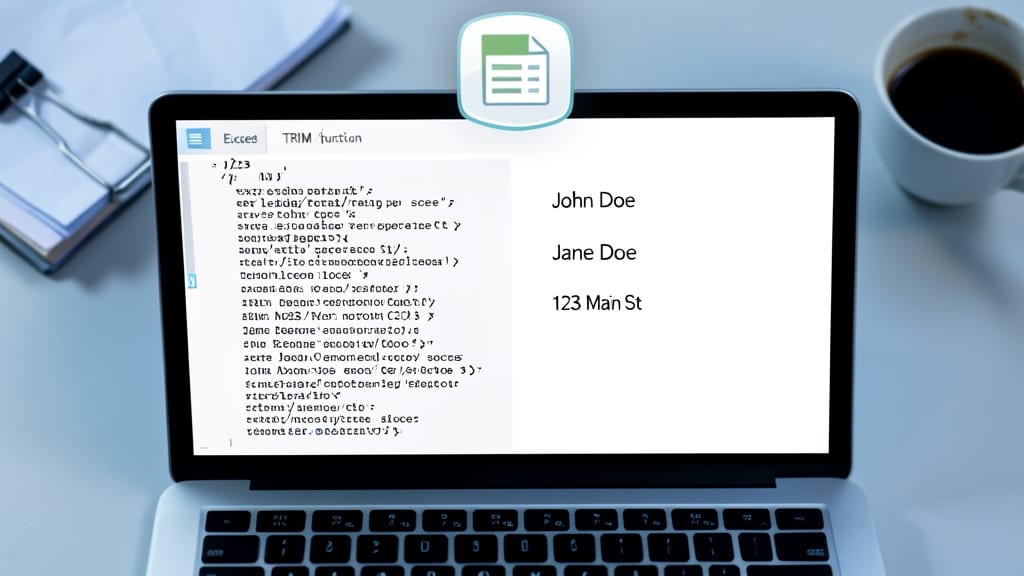
Tired of manually deleting spaces in your Excel data? The TRIM function is your secret weapon for instantly cleaning up messy text—whether it’s from imported CSV files, merged cells, or inconsistent data entry. Unlike other functions that extract or combine text, TRIM focuses solely on eliminating extra spaces, including those sneaky hidden ones between words.
With just =TRIM(A2), you’ll strip leading, trailing, and multiple internal spaces from any cell’s content. It’s perfect for preparing data for analysis, ensuring accurate sorting, or merging text without gaps. Unlike manual edits, TRIM works instantly across entire columns, saving you hours of tedious work.
This function is a must-have for data analysts, small business owners, or anyone dealing with imported datasets. Give it a try—your spreadsheets will thank you! ✨
Upper Lower and Proper Functions for Text Formatting

Tired of inconsistent text formatting ruining your polished reports? The UPPER, LOWER, and PROPER functions instantly standardize case for professional results. Whether you're formatting acronyms, cleaning databases, or preparing presentations, these functions save hours of manual editing.
Use UPPER() for all-caps text (like NASA or CEO), LOWER() for uniformity (e.g., converting McDonald's to mcdonald's), and PROPER() for titles (e.g., turning john doe into John Doe). They work seamlessly with other text functions and handle edge cases like mixed-case inputs automatically.
Perfect for accountants standardizing financial reports, marketers exporting clean datasets, or anyone who wants their spreadsheets to look polished and professional. ⚡
Substitute Function to Replace Text Patterns

Tired of manually fixing inconsistent data like hyphens in product codes or special characters in imported files? The SUBSTITUTE function automates replacements with precision—think of it as Excel’s built-in "find and replace" but with formula power.
Use =SUBSTITUTE(text, oldtext, newtext, [instancenum]) to swap specific patterns: replace hyphens with spaces in product codes, remove unwanted symbols from phone numbers, or even clean up email addresses with inconsistent formatting. The optional instancenum lets you target only the first, second, or all occurrences—perfect for partial edits.
Data analysts and small business owners will love this for normalizing datasets before analysis. It’s the secret weapon for turning messy imports into clean, usable data with zero manual effort. ✨
Find Function to Locate Text Within Cells

Need to locate specific text within cells for deeper data analysis? The FIND function reveals the exact position of any character or substring—critical for extracting data between delimiters or validating content before processing.
Unlike SEARCH (which is case-insensitive), FIND respects case sensitivity, returning the starting position of text (e.g., =FIND("@", A2) finds the position of "@" in an email address). Combine it with LEFT or RIGHT to isolate segments between markers, like extracting domain names from URLs.
Perfect for developers validating API responses, analysts parsing log files, or anyone ensuring data integrity before further processing. ⚡
Len Function to Count Characters in Cells

Tired of manually counting characters in spreadsheets to enforce data rules? The LEN function automates this with a simple formula—perfect for validating ZIP codes, passwords, or product codes without guesswork.
Just type =LEN(cell) to instantly return the character count. For example, =LEN(A2) checks if a ZIP code cell contains exactly 5 digits (returning TRUE if it does). Combine it with IF for conditional checks: =IF(LEN(A2)=5, "Valid", "Invalid"). It even handles spaces, special characters, and multiline text.
This is the go-to tool for data validation specialists and quality control teams ensuring consistency in large datasets. ⚡
Replace Function for Advanced Text Replacements
Tired of manually editing every instance of a typo or outdated term across thousands of cells? The REPLACE function is your secret weapon for bulk text transformations—far more powerful than SUBSTITUTE because it lets you replace all occurrences of a substring or use wildcards for pattern matching.
With syntax like =REPLACE(oldtext, startnum, numchars, newtext), you can swap out specific characters (e.g., turning "USD" into "EUR" across a dataset) or even replace partial matches using wildcards like ?* for flexible edits. Need to update product codes, standardize abbreviations, or clean messy imports? This function handles it all without manual copy-pasting.
Data analysts and business users will love REPLACE for its precision—ideal when you need to transform large datasets or enforce consistent formatting before analysis. ⚡
Char Function to Insert Special Characters

Need to insert invisible formatting like tabs, line breaks, or custom delimiters without typing them manually? The CHAR function lets you insert any ASCII character by its code—perfect for automating report formatting or creating structured data exports.
Use CHAR(10) for line breaks, CHAR(9) for tabs, or CHAR(13) for carriage returns. This is especially useful when merging data from different sources or generating CSV files with precise delimiters. For example, =CHAR(10)&"New Line" creates a clean line break in your cell.
Data analysts and report generators will love this for automating multi-line entries or adding invisible separators. No more manual copy-pasting—just pure, programmable formatting. ✨